
How to choose the ideal location for a thriving micro-farm?
Choosing the location is one of the major success factors for a micro-farm. Here are the criteria to prioritise to build a viable activity.


Choosing the location for setting up is one of the major success factors for a micro-farm. Discussions often focus on technical itineraries, tools, organisation or marketing, which are indeed essential. However, the location remains the invisible foundation on which the entire production system rests.
With experience, certain criteria appear as priorities, while others must be put into perspective. The aim is not to find a perfect place — which does not exist — but to intelligently rank the parameters in order to build a productive, profitable and sustainable farm.
1. Access to water: a non-negotiable criterion
Access to water is probably the most structuring criterion. Without abundant, reliable water — in quantity as well as in quality — no intensive market-gardening system can function sustainably. Borehole, spring, mains supply, retention pond: every option must be explored before committing to a site.
2. The soil: a potential for improvement, but not without limits
Bio-intensive methods make it possible to significantly improve soil structure and fertility through regular inputs of organic matter and careful management of cultivation beds. However, not all soils have the same starting potential.
A very clayey, cold or waterlogged soil can considerably complicate the work, especially in spring, and slow down production cycles. Conversely, more balanced soils make cultivation easier and offer better performance for an equivalent effort.
3. Microclimate, exposure and slope: understanding your environment
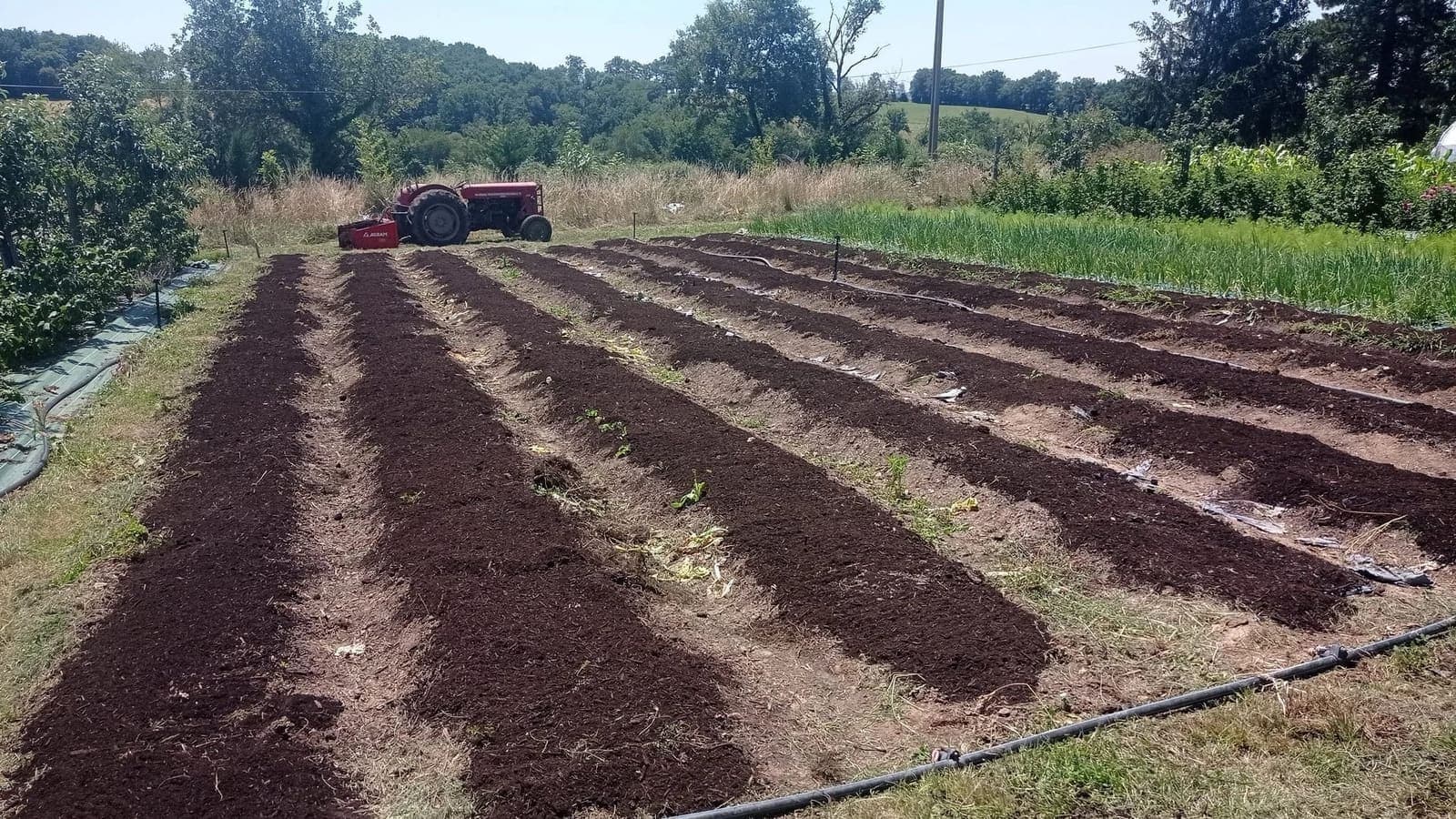
The local microclimate, the exposure and the slope of the land directly influence yields and how demanding the work is. A well-exposed plot, sheltered from late frosts and excess water, starts the season earlier and stays productive longer.
Observing the land in different seasons makes it possible to anticipate constraints and to lay out the production zones intelligently.
4. Prevailing winds: an often underestimated factor
Wind is frequently overlooked, even though it can have a significant impact on yields. A drying wind can lead to substantial losses, especially in summer.
Planting hedges represents a particularly effective layout lever at the scale of a micro-farm. Even though the climate cannot be changed, the immediate environment can be designed to mitigate its constraints.
5. The catchment area: an entrepreneurial approach
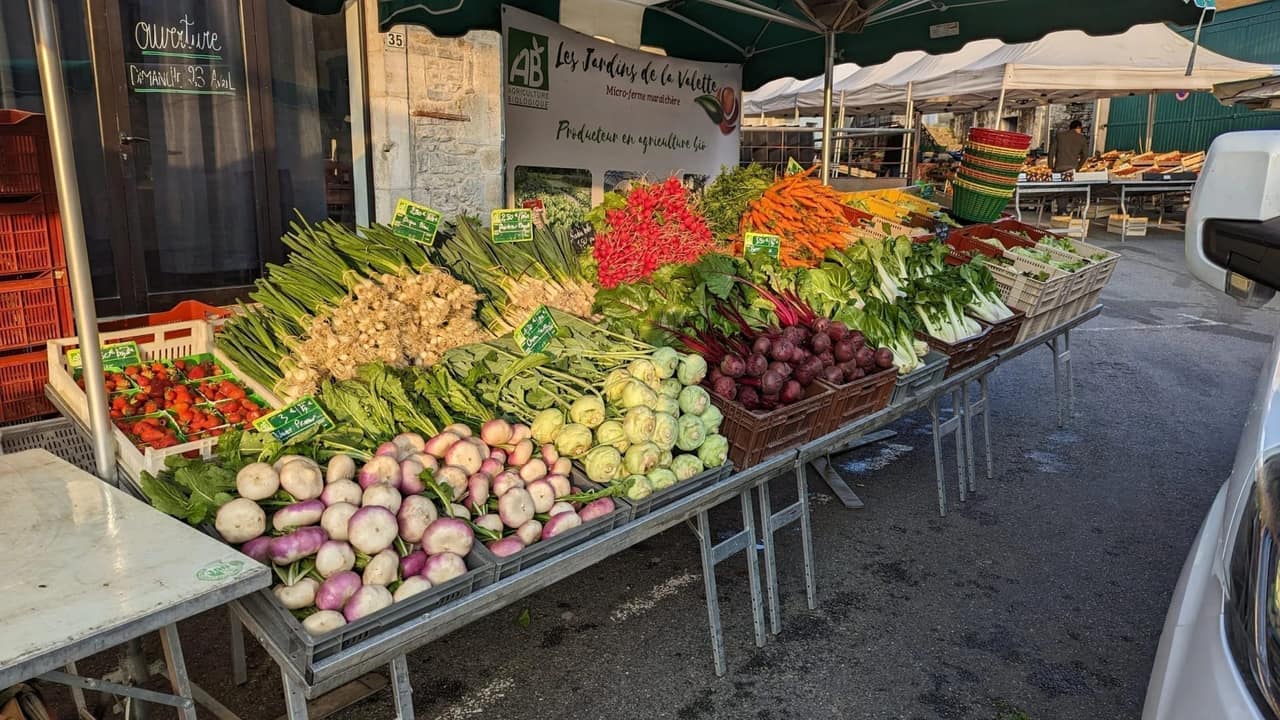
A micro-farm is also a commercial activity. Proximity to solvent customers, access to regular markets, CSAs, restaurants or producer-owned shops directly drive turnover.
Studying the catchment area in the same way you would study a retail location helps avoid major commercial setbacks after setup.
6. The quality of the place: a secondary but real factor
The living environment plays an important role in motivation and daily well-being. Working in a pleasant setting can strengthen long-term commitment.
However, this criterion must remain secondary compared to technical and economic aspects. An aesthetically attractive place but with major water or soil constraints can quickly become problematic. The quality of the place is an asset, provided it does not take precedence over agronomic and economic fundamentals.
7. Allowing yourself to evolve
A farm setup is not necessarily definitive. It is possible to adjust your project over time and, if necessary, change site to better meet your goals.
Within bio-intensive market gardening, creating a new farm can be relatively quick to set up. Even if it involves an investment, this option makes it possible to correct certain initial choices. Each experience helps refine the selection criteria and build a more coherent project.
Conclusion
Choosing the location of a micro-farm is a strategic decision that directly influences profitability, quality of life and the durability of the project. Access to water, the nature of the soil, the microclimate, exposure, wind management and the catchment area must be analysed rigorously and prioritised lucidly.
No location is perfect, but some offer significantly more favourable conditions for developing a viable activity. A structured approach, combined with attentive observation of the land, makes it possible to lay solid foundations.
-

How to obtain a fertile market-gardening soil quickly?
Transforming an acidic, waterlogged, depleted soil into a living, well-structured one: a hands-on account of 5 concrete levers to make the transition succeed.
-

What mistakes should you avoid when starting out in small-scale market gardening?
Starting bio-intensive market gardening on a small surface is an exciting adventure, but full of pitfalls. Many project leaders make the same mistakes.
-

How to grow early potatoes successfully: the market gardener's guide
Essay article