
Do you really need a tractor on a market gardening micro-farm?
Micro-farms are designed at human scale, without heavy machinery. But some uses can justify a compact tractor. Let's take a closer look.


Market gardening micro-farms are often conceived as human-scale agricultural systems, without tractors or large machinery. Yet some uses can justify integrating a compact tractor. In this article, we explore what defines a micro-farm, the potential uses of a tractor, and the conditions under which its use is relevant.
What is a micro-farm?
A micro-farm is a small-scale agricultural model, generally on a surface of less than one hectare — sometimes even less than 5,000 m².
Tractor uses on a micro-farm
Even though the philosophy of the micro-farm rests on “all-manual” work, using a compact tractor may be relevant for certain specific tasks. At Les Jardins de la Valette, a compact tractor is used mainly for two things.
Adding organic matter
Adding compost is essential in bio-intensive market gardening. On very small surfaces, a wheelbarrow is enough — but a compact tractor saves considerable energy. With a hitched bucket, the compost is loaded directly from the pile (no manual handling), then deposited at the foot of the beds. Distribution can then be done with a wheelbarrow, which avoids driving on the beds.
Vegetable harvest
The time saved is not always significant, especially if the washing building is central and close to the crops. On the other hand, the tractor makes it easier to move empty and full crates around. It reduces strain by transporting harvests to the wash room. In the long run, this spares the back and joints — a real plus after several years in the trade.
The importance of farm layout
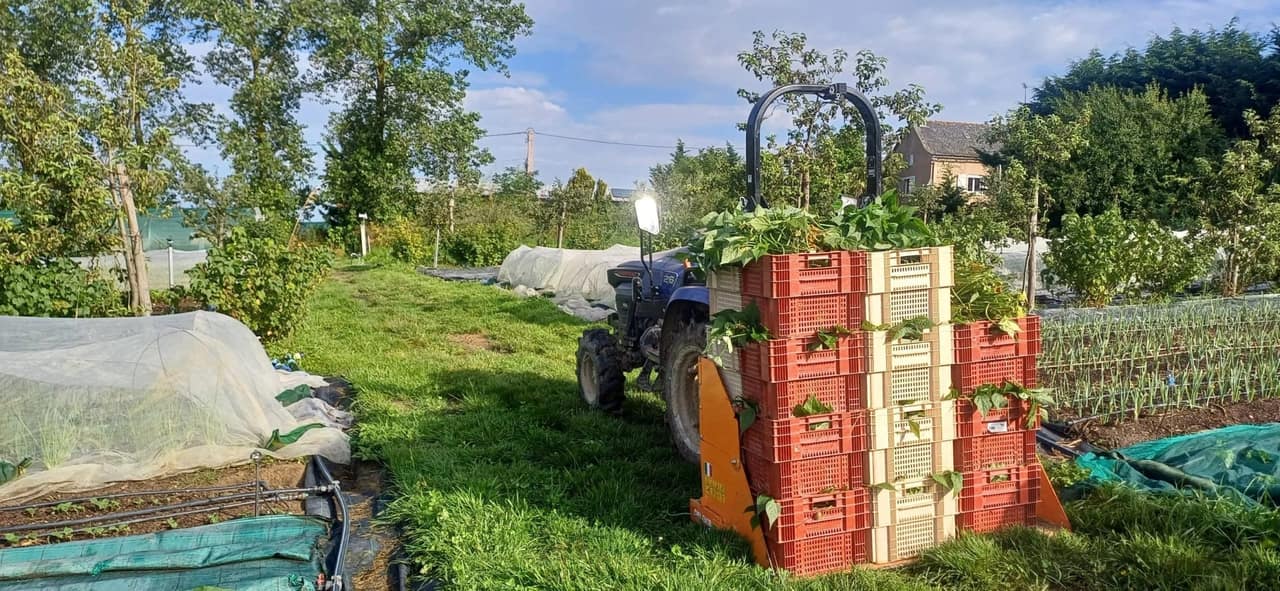
For a tractor to be useful without damaging the soil or interfering with crops, the farm must be designed in advance. A good design includes:
- a central path wide enough for the tractor to circulate;
- a well-positioned washing building to reduce travel;
- centralized compost storage, easily accessible by reversing with the bucket.
Which type of tractor to choose?
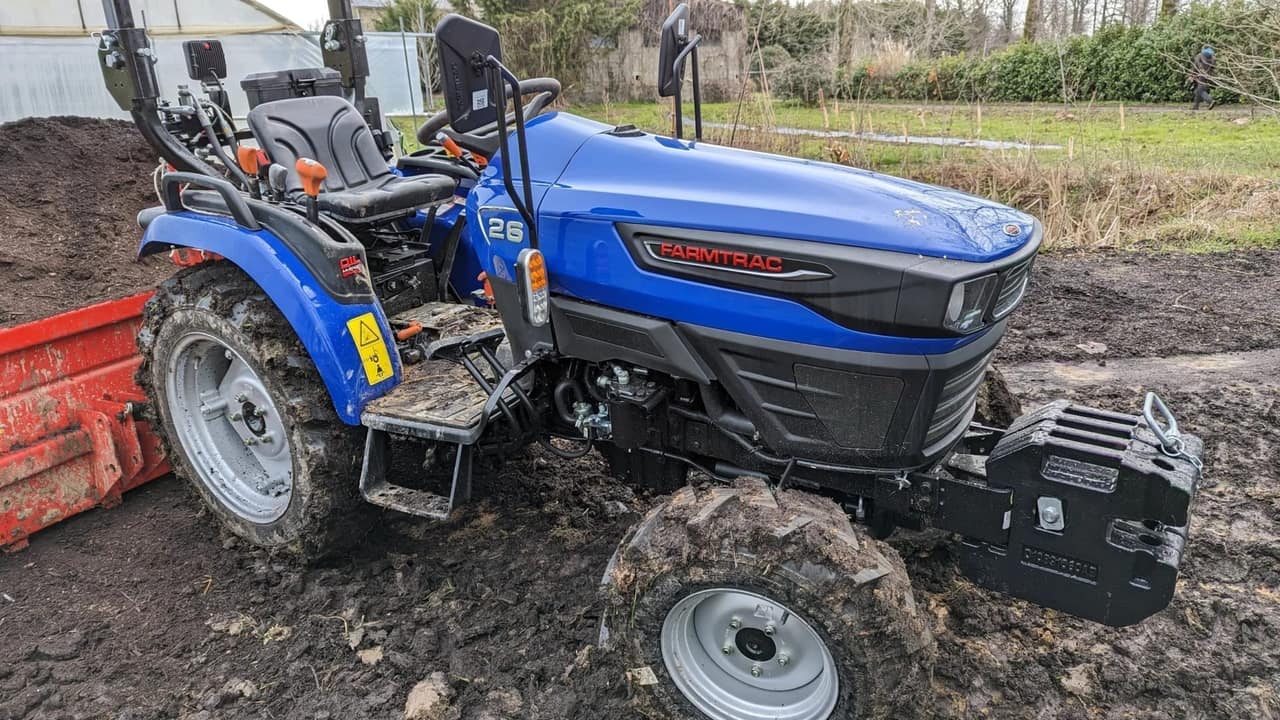
If you opt for a tractor, several options exist:
- Compact tractor or small light tractor: light and adapted to small surfaces, they preserve soil structure and largely meet the needs of a micro-farm.
- Recent second-hand models: it is possible to find a good model for less than €10,000. The second-hand market reduces costs while accessing reliable equipment.
- Versatility: a compact tractor is not limited to applying compost or harvesting. It can also drive an irrigation pump, a flail mower, a wood splitter, a generator. This multifunctionality can justify acquisition even on a small surface.
Conclusion
A tractor is not essential on a market gardening micro-farm, but it can be an asset depending on scale, organization and the grower’s needs. To relieve the physical load and optimize certain tasks, a well-used compact tractor can improve the sustainability of the work without betraying the spirit of the micro-farm.
As always in agriculture, everything depends on context, objectives — and the grower’s back.
-
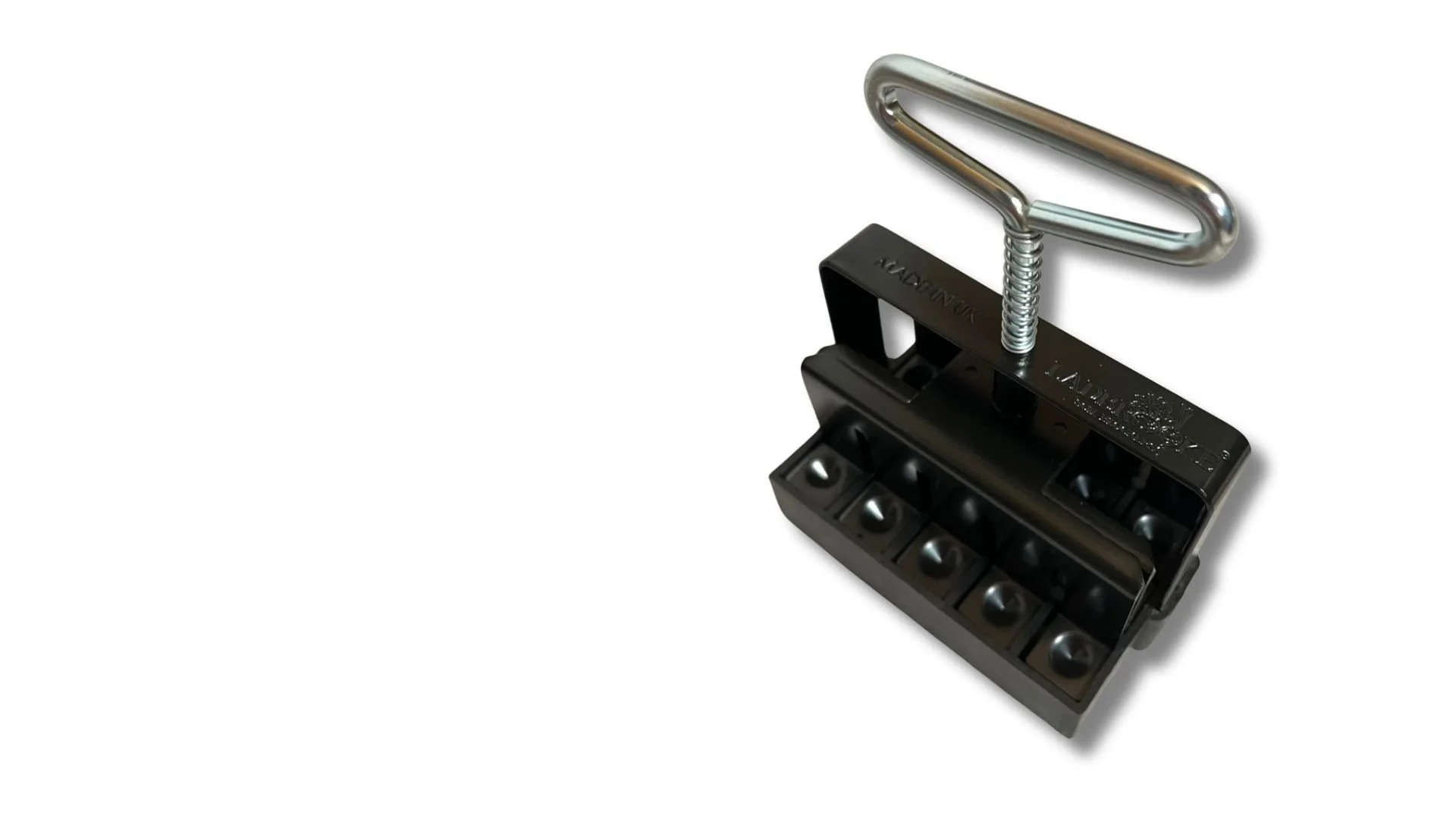
How to use the Micromotte 20 Ladbrooks for successful nightshades?
Long overlooked, the micro-soil-block maker is a remarkably effective tool to start hundreds of early tomatoes, peppers and eggplants.
-
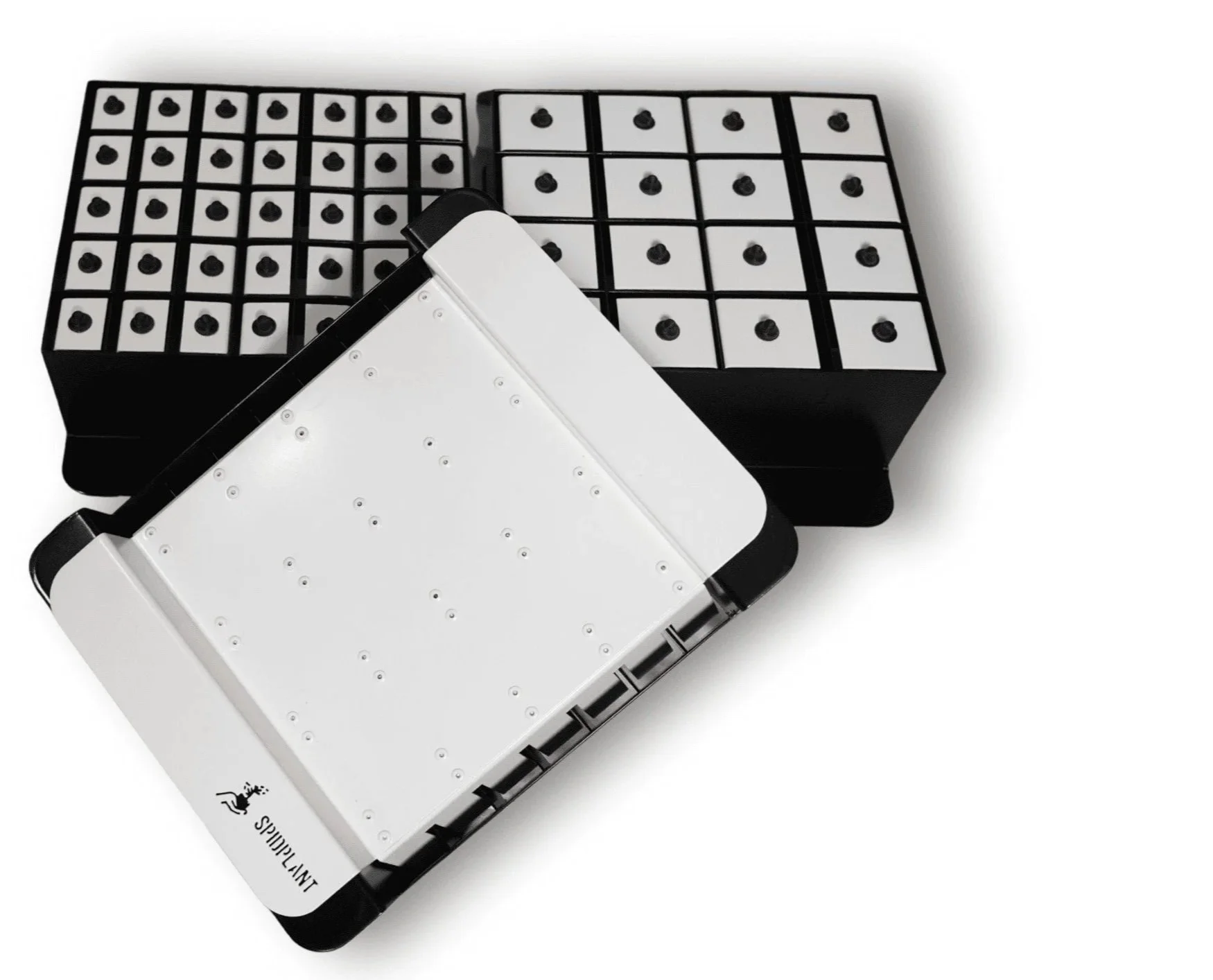
How to start your seedlings on a micro-farm with Spidplant?
Producing seedlings on a micro-farm can quickly become a time-consuming and complex step, especially when seeking to produce in quantity efficiently.
-
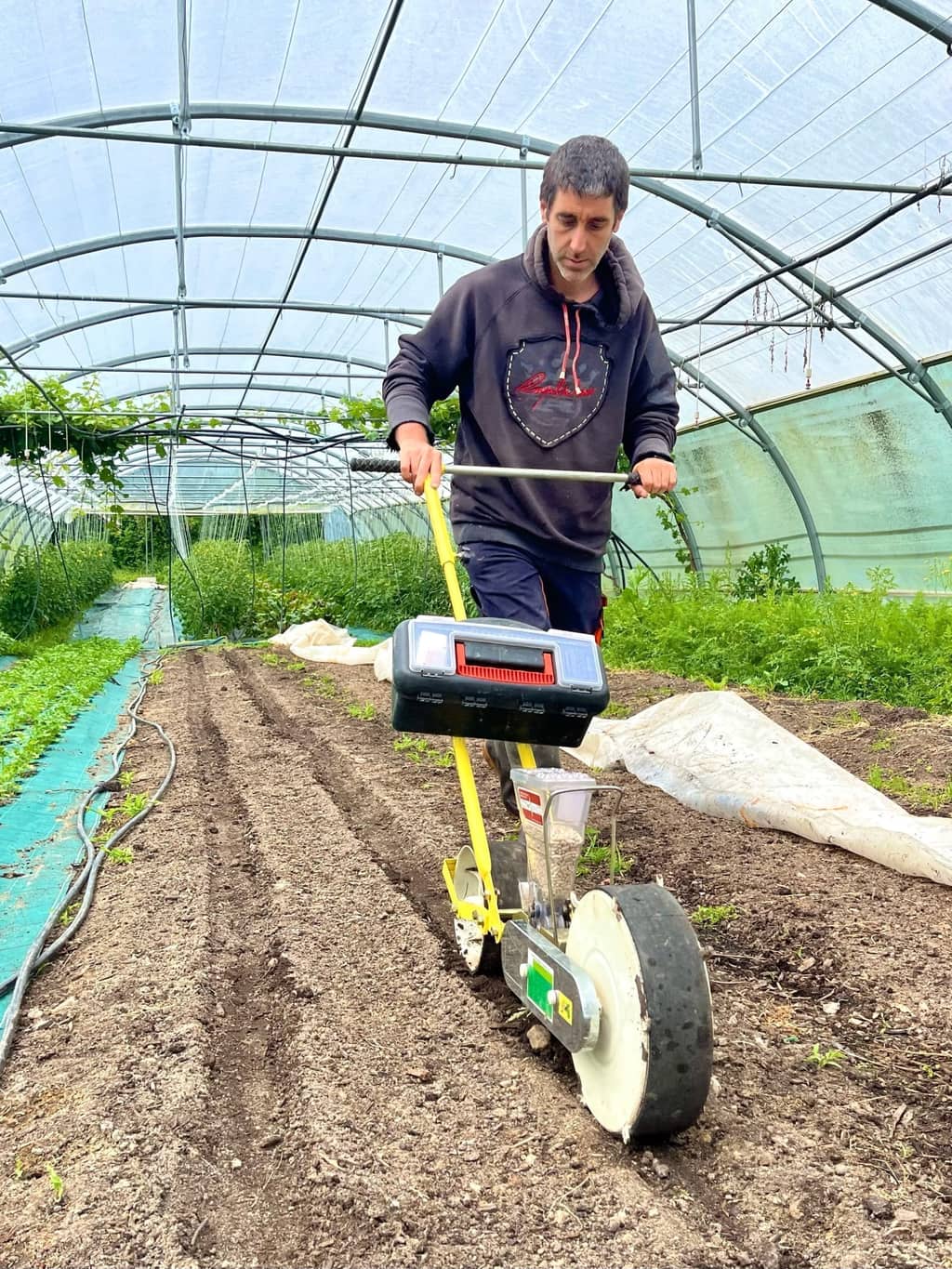
All about the JP1: the essential professional market gardener seeder
Precision, robustness and versatility — the JP1 seeder by Terradonis (Jang) is a reference companion for direct seeding in bio-intensive market gardening.