
Seedling greenhouse: 5 essential tips to face the cold and succeed with your seedlings
In the heart of winter, a seedling greenhouse may seem at a standstill. Yet it is at this time that spring success is largely prepared…


In the heart of winter, a seedling greenhouse may seem at a standstill. Yet it is at this time that spring success is largely prepared. Here is our way of organizing the seedling greenhouse: winter rest period, cleaning before restart, heating systems, thermal inertia management and frost protection. The objective — to launch March seedlings in good conditions, even in a cold and demanding climate.
In mid-January, our seedling greenhouse at Les Jardins de la Valette is still in full hibernation. The tables are empty, the doors open, and grass has begun to grow back on the edges. Yet this apparent inactivity is an integral part of our production strategy.
Located in Aveyron, at about 450 meters altitude, we have to deal with cold, low-light winters and risks of late frost down to -8 °C in March. In this context, the seedling greenhouse is a key tool — provided it is well thought out, well maintained and properly protected.
1. A greenhouse deliberately at rest during winter
Accepting a period without seedling production
In mid-January, our seedling greenhouse is completely empty. We buy our seedlings at the very beginning of the season for the first plantings under greenhouse, because producing seedlings in the middle of winter, in our region, is often more complex and riskier due to cold and lack of light.
The seedling greenhouse really starts working from the beginning of March. Between late September and late February, that is nearly five months, there is therefore no sowing. During this period, we deliberately leave the doors open so that the cold penetrates the greenhouse. This limits the survival of insects and diseases that could otherwise overwinter inside.
Cleaning to restart on healthy foundations
Even though we are in organic farming and we do not systematically sanitize all our greenhouses, the seedling greenhouse remains a particular area to which we pay a lot of attention. In winter, you can still find sticky traps against the seedling fly, sand on the tables, potting soil on the floor and grass that has grown on the edges.
Just before the first seedlings, we carry out a complete cleaning. As the greenhouse is equipped with a concrete slab, this greatly facilitates the work: weeding, then a strong jet of water (without going as far as the high-pressure cleaner). The objective is to eliminate all the corners where potting soil could accumulate, because these are ideal areas for the seedling fly.
2. Heating effectively thanks to suitable tables
Two heated table systems
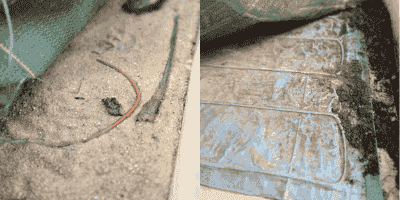
Our greenhouse is equipped with two heated cultivation tables. The first works with heating cables placed on a bed of sand, which itself rests on polystyrene insulation and a metal frame.
The whole is controlled by a programmer that manages different day and night temperatures.
The second table is equipped with horticultural heating mats — cables integrated between two aluminum sheets, very simple to install. No sand here: the mat is placed directly on the polystyrene, then covered with a woven fabric to improve work comfort and facilitate cleaning.
Modularity and energy control
This second table is divided into two distinct heating zones. This allows us to activate only part or all of the surface, depending on the quantity of seedlings and their needs. This modularity is particularly interesting for adjusting temperatures according to crops, especially for sowing or growing solanaceous plants, which are more demanding in heat.
Generally speaking, we advise dividing heating surfaces as much as possible. This allows you to adapt heating to actual needs, save electricity and gain flexibility throughout the season.
3. Protecting from cold thanks to inertia and multi-protections
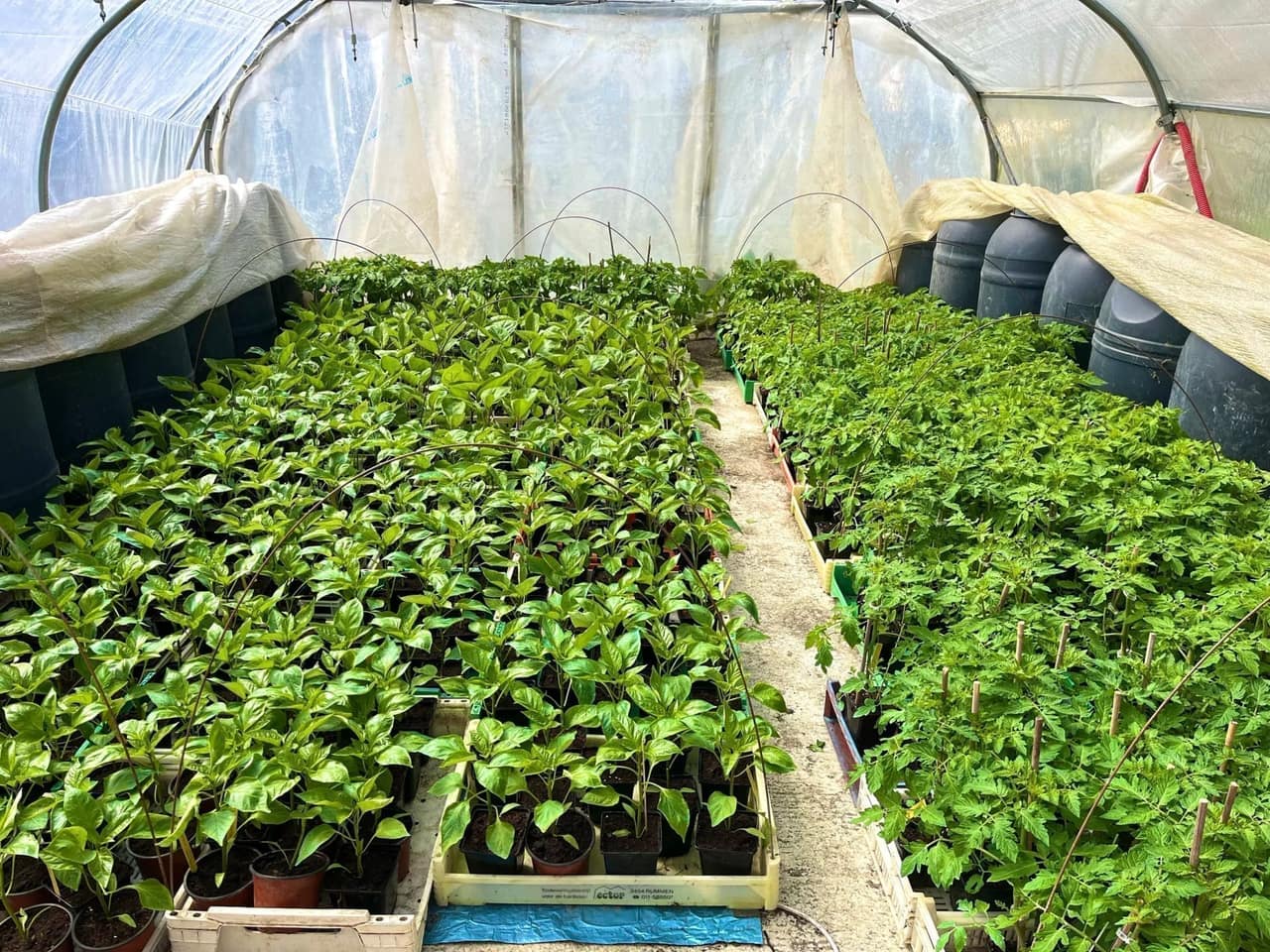
Limiting heat loss and drafts
In winter and early spring, the greenhouse’s tightness is paramount. When temperatures become critical, we add a plastic tarp on the doors, simply fixed with clamps. This creates an additional wall and prevents cold drafts from circulating in the greenhouse.
Aeration remains possible thanks to openings at height and on the sides, sufficient even in March in case of temperature rise. In the evening, thermal nets are systematically put back in place to form “blocks” of heat. This notion of block is essential: the more the elements are grouped together, the greater the thermal inertia, and the more the greenhouse resists late frosts.
The heated tables are also equipped with permanent hoops, which serve both as support for sticky traps and for the rapid installation of thermal nets. In case of intense cold announced, an additional net can encompass all the tables, even if this manipulation remains occasional due to the working time it requires.
Conclusion
Even in the heart of winter, a seedling greenhouse never really sleeps. The rest period is a key moment to observe, clean and prepare the production tool. Thanks to good insulation, modular heating systems, thermal inertia and rigorous management of cold protection, it is possible to have a high-performance seedling greenhouse from the beginning of spring.
These choices allow us to secure the March seedlings, limit diseases and pests, and approach the season with more serenity, despite a sometimes harsh climate.
-

How to grow early potatoes successfully: the market gardener's guide
Essay article
-
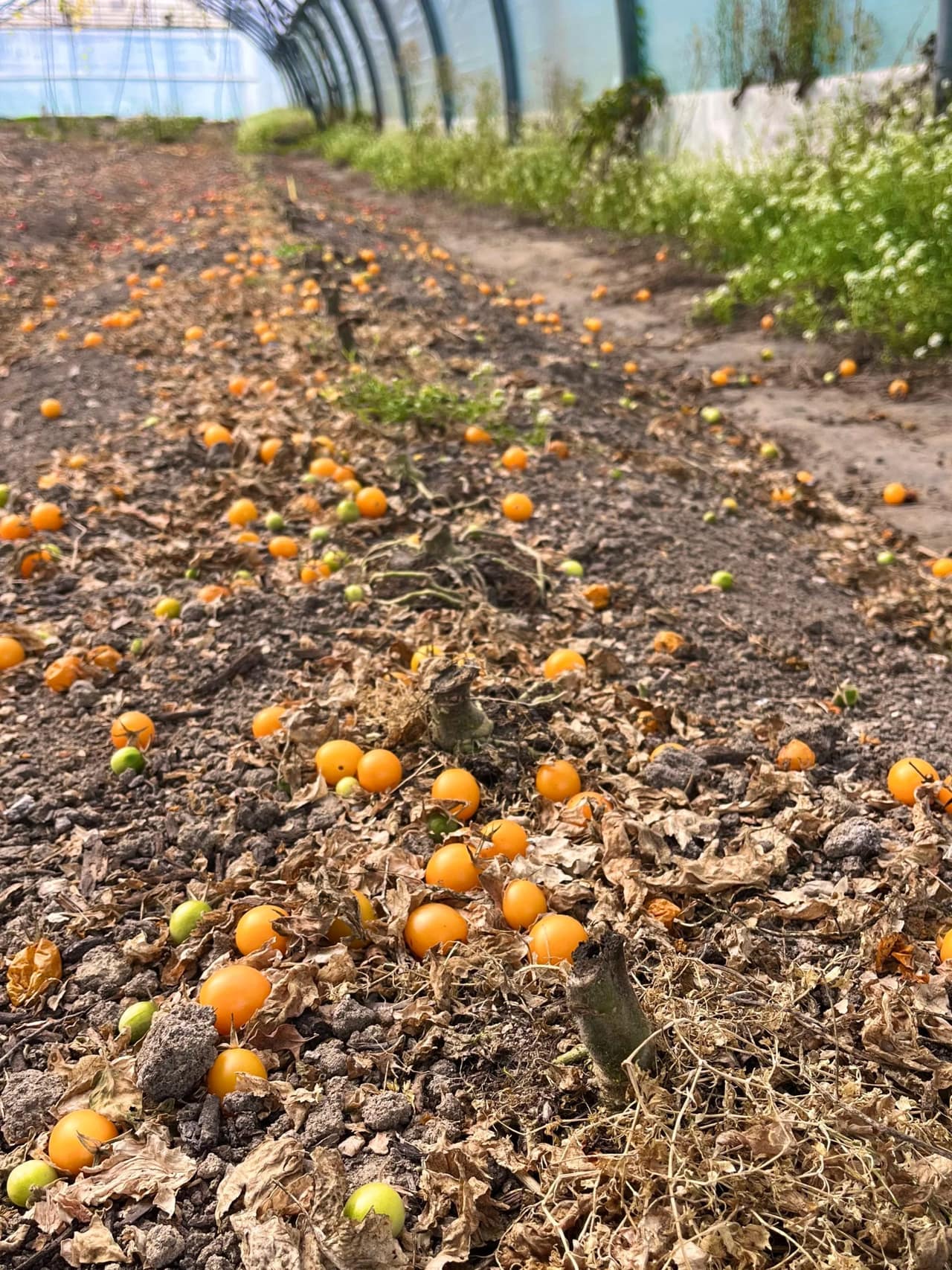
Winter rest in market gardening: an essential strategy for the long haul
Rather than enduring winter, make it an ally: a time for recovery, review and anticipation, essential for the sustainability of a micro-farm.
-
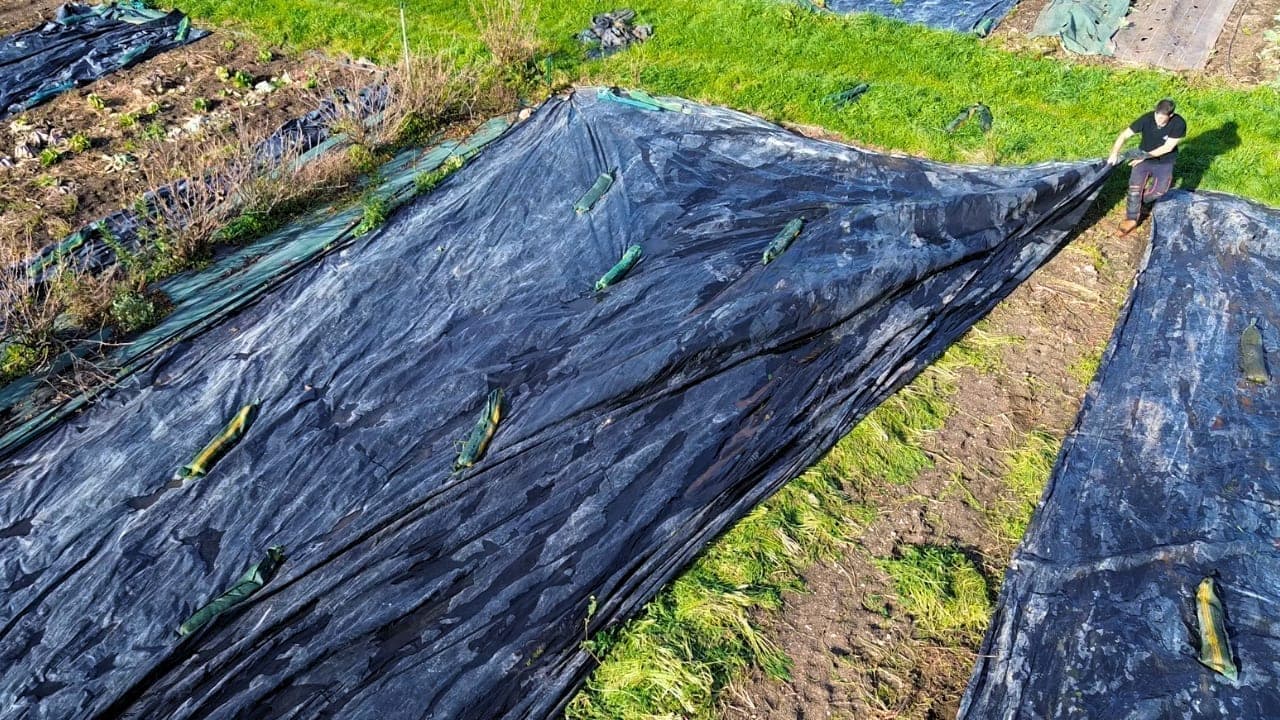
Closing the garden: how to prepare your beds for winter?
The arrival of winter does not mean the market gardener can simply 'let the soil rest' bare. Quite the opposite. October to December are key months.