
What is a market gardening micro-farm?
Small plots, frugality, diversification: the founding principles of organic market gardening micro-farms, explained simply.


Organic market gardening micro-farms have gained popularity in recent years, and rightly so. These small-scale, human-sized farms, inspired by principles like bio-intensive market gardening, are reshaping our vision of modern agriculture.
In this article, we explore what a micro-farm is and the major principles that define it.
Bio-intensive market gardening and micro-farm

Bio-intensive market gardening is the central pillar of micro-farms. It aims to maximize vegetable production on a small surface using demanding techniques: compost, mulching, companion planting and crop rotation.
This approach delivers high yields without chemical products or heavy mechanization.
Crop diversification
Micro-farms favor diversification rather than monoculture. By growing a variety of vegetables, fruits and aromatic herbs, growers increase the resilience of their farm to diseases and pests, while promoting efficient use of natural resources.

Land, material and financial frugality
Micro-farms seek to optimize the use of available space, material and financial resources. Rather than investing massively in expensive machines, growers favor manual tools and clever techniques to minimize their environmental and economic impact.
Spatial and temporal densification of production
Micro-farms use intensive cultivation techniques to maximize production on a small surface. Rotations and strategic plant arrangements make the best use of available space throughout the year.

Territorial and social integration
Micro-farms seek to integrate harmoniously into their local environment. They build strong links with their community by selling locally, fostering exchanges with other farmers and getting involved in social and environmental projects.
To go further

-
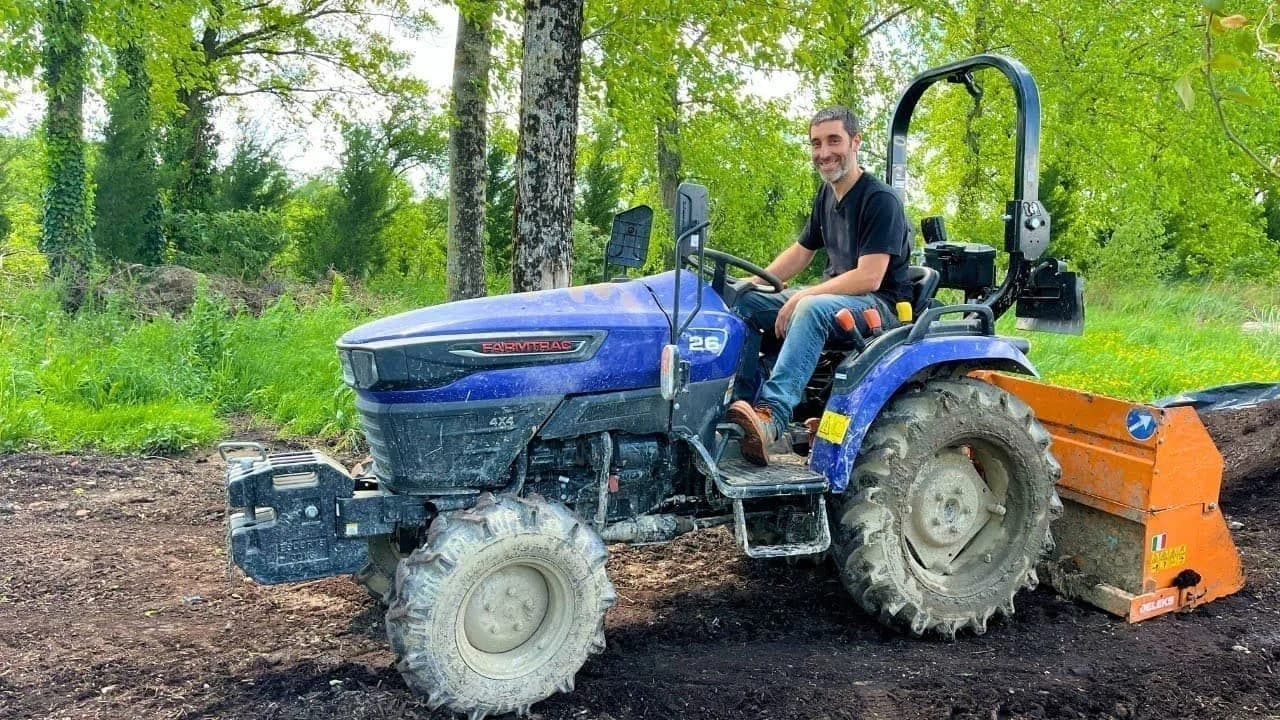
Do you really need a tractor on a market gardening micro-farm?
Micro-farms are designed at human scale, without heavy machinery. But some uses can justify a compact tractor. Let's take a closer look.
-
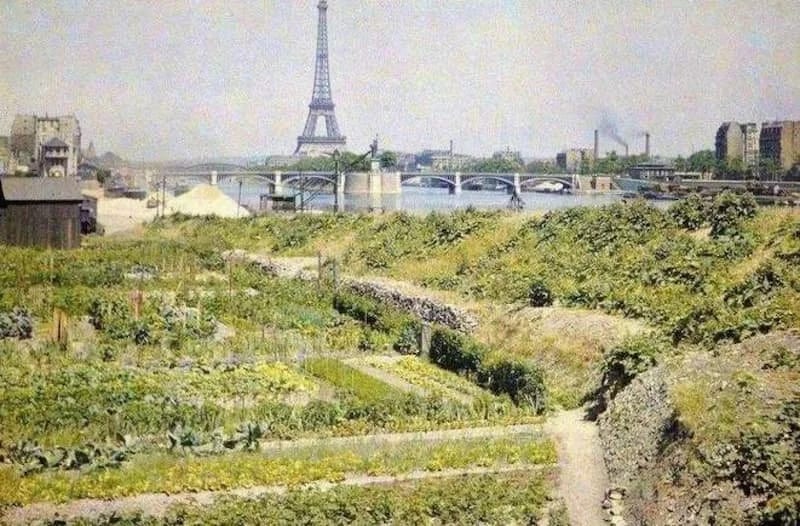
What is bio-intensive market gardening on a small plot?
Vegetable production concentrated on 4,000 to 8,000 m², human-scale, diversified and economically viable: the fundamentals of bio-intensive market gardening.
-

Micro-farms: organic market gardening on a human scale
To make a comfortable living from vegetables, one hectare is enough. A deep dive into Jean-Martin Fortier's book on micro-farms.