
How to prepare your farmers' market like a pro?
Selling at farmers' markets is much more than putting a few crates on a table. It is real work of organization and anticipation, where every gesture counts.


Selling at farmers’ markets is much more than putting a few crates on a table. It is real work of organization and anticipation, where every gesture counts. The goal — be efficient, present your products well and offer customers a pleasant and smooth experience.
Here is a structured method, step by step, to prepare a farmers’ market in a professional way.
1. Unloading: the key is efficiency
The day starts early, often around 6:30 am, with unloading the truck.
To save time and effort, it is recommended to use sturdy ramps, well-wedged to support the weight of the crates.
Market equipment — tables, parasols, scales, baskets, banners — can stay permanently in the truck. This avoids repeated handling at every market. Each type of equipment is best grouped in a dedicated crate: scales, bags, signage, etc.
In just a few minutes, everything is ready for setup.
2. Set up a practical and attractive stand
An efficient stand combines height, legibility and accessibility. Tables are arranged in a U around the customer, parasols create even shade, and crates are tilted slightly forward to show off the produce.
3. Organize your vegetables logically
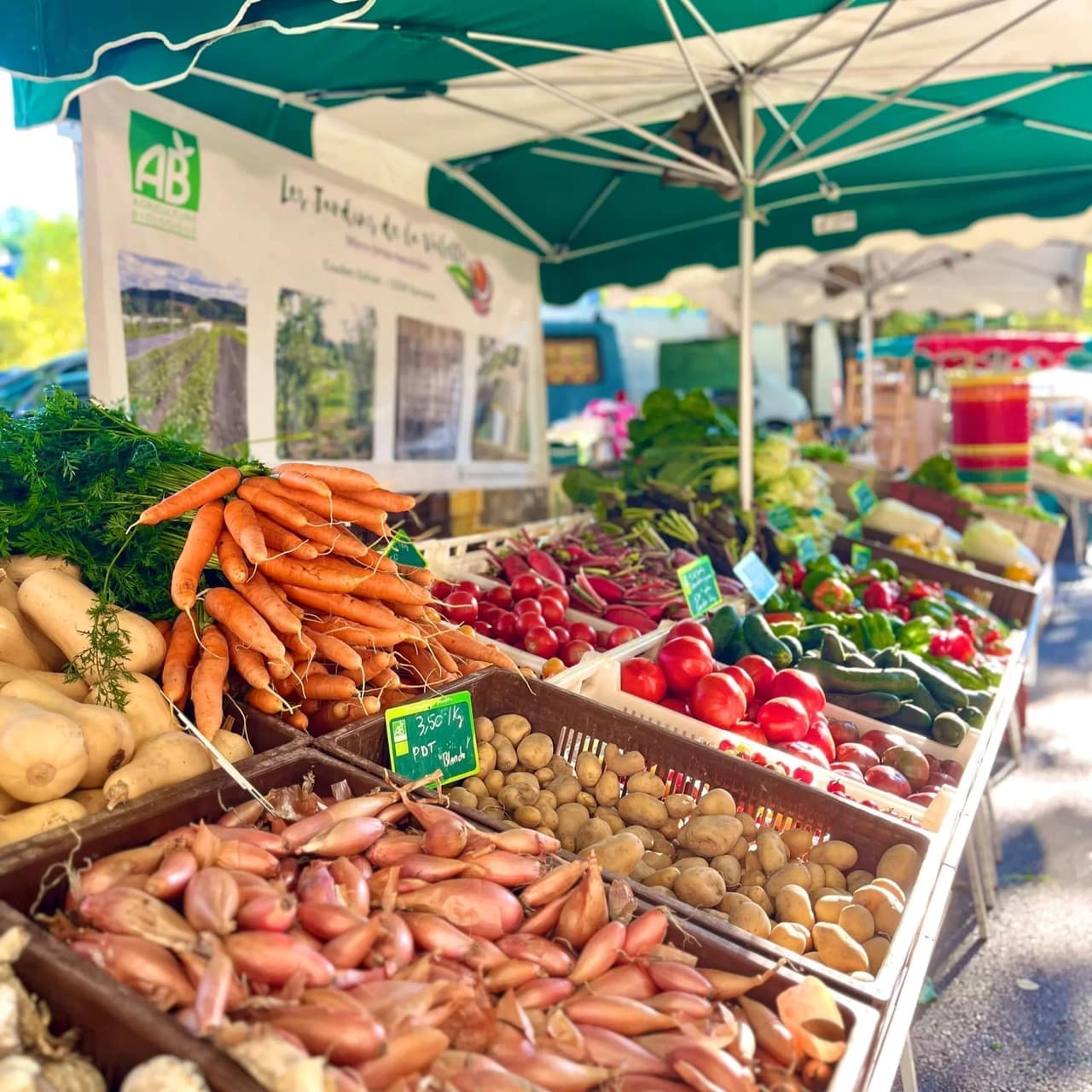
Vegetables are grouped by category and color, to offer an immediate visual cue. Star products go at eye level; heavy items, roots and tubers, at the bottom.
Prices are displayed clearly, on a chalkboard or dedicated label, never handwritten on a piece of paper that flies away.
4. Think about flow and customer autonomy
At a medium-sized market, a self-service system often turns out to be the smoothest.
Baskets can be made available at the end of the stand so customers can serve themselves before going to the scale.
The scale must be tared with the baskets, to guarantee accurate weight: this approach saves time and lets you manage a busy market on your own.
An “AB” sign and a clearly visible banner remind customers of the organic certification and reinforce the credibility of the stand.
Providing a small free area where customers can put down their bags or baskets clearly improves their comfort.
5. End of market and smart tidying up
Once the market is over, unsold vegetables go back into cold storage as soon as you return to the farm to be reused for the next market.
It is also a special moment: exchanges, friendliness and the satisfaction of seeing produce go directly into the baskets of local residents.
Conclusion
Preparing a market is a real know-how with several stages: logistics, presentation, stock management and customer relations.
With good habits and a well-honed organization, you gain efficiency and peace of mind. A well-thought-out stand becomes the showcase of the farm, and a successful market always reflects work done with passion.
-

How to grow early potatoes successfully: the market gardener's guide
Essay article
-

How to choose the ideal location for a thriving micro-farm?
Choosing the location is one of the major success factors for a micro-farm. Here are the criteria to prioritise to build a viable activity.
-
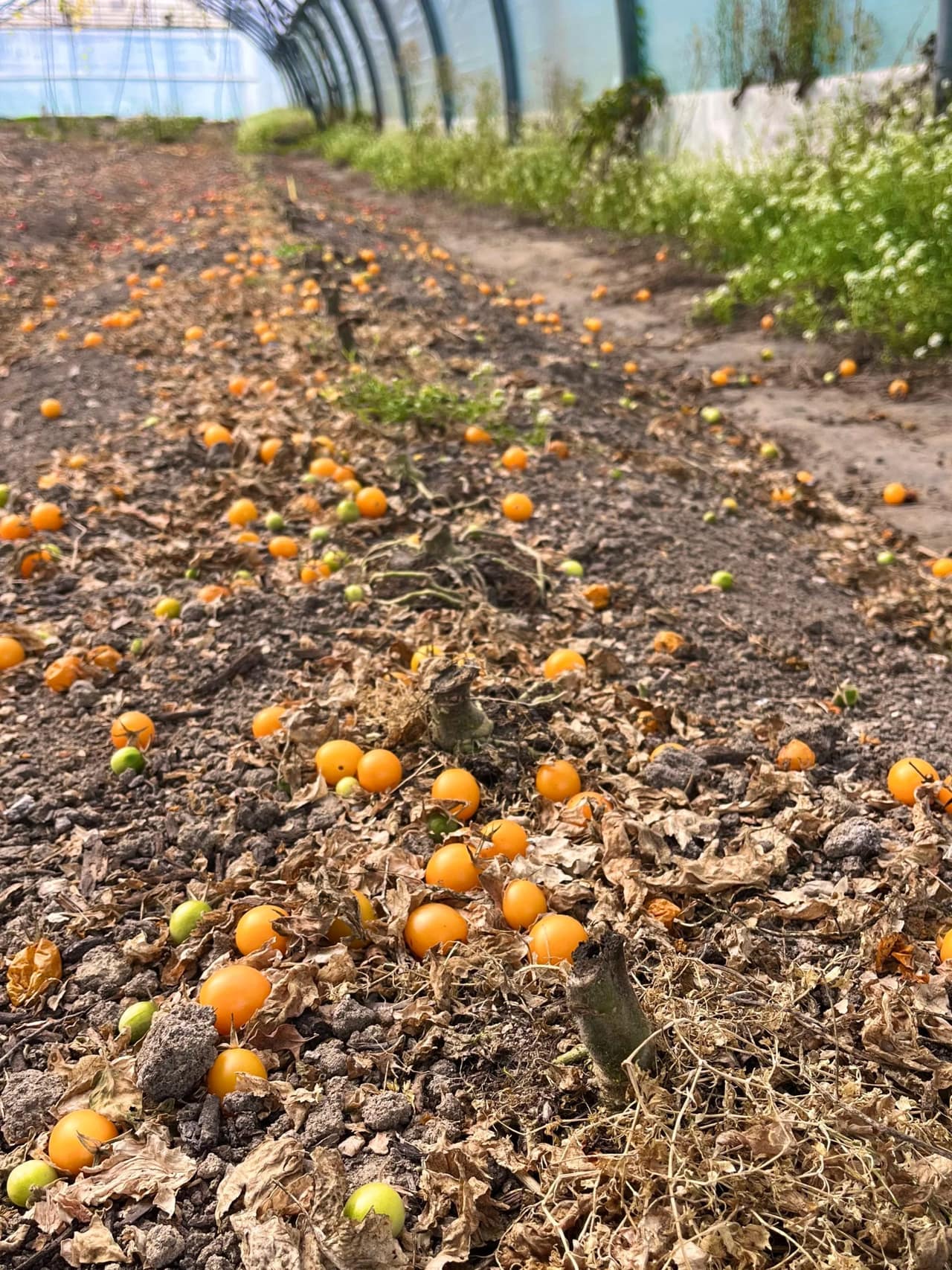
Winter rest in market gardening: an essential strategy for the long haul
Rather than enduring winter, make it an ally: a time for recovery, review and anticipation, essential for the sustainability of a micro-farm.